

Blank walls can make a room feel unfinished, but decorating them does not have to be expensive or complicated. With a few basic supplies and some creativity, you can make attractive wall decor that reflects your personal style.
These easy DIY ideas work in bedrooms, living rooms, home offices, entryways, and more. Many projects can be completed in an afternoon, while others can be adapted to match the colors and materials you already have at home.
1. Create a Simple Gallery Wall
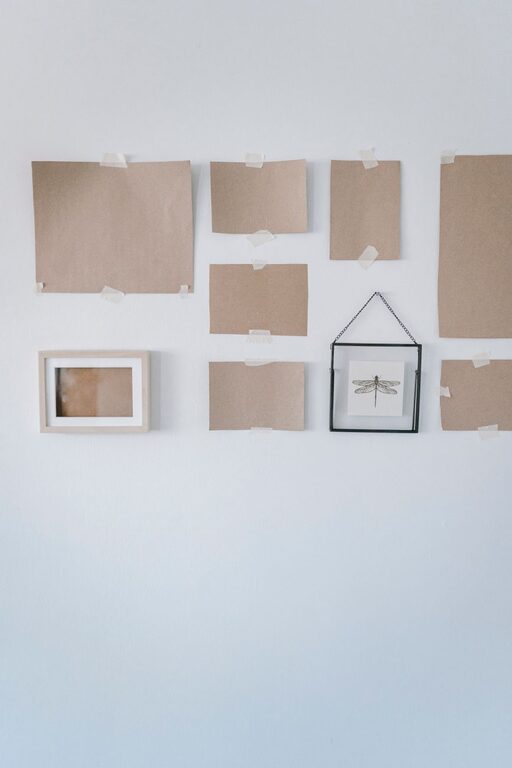
A gallery wall is one of the easiest ways to add personality to a large, empty wall. You can use framed art, family photos, postcards, children’s drawings, or even small fabric samples.
How to make it
- Gather several pieces that share a color, theme, or mood.
- Arrange them on the floor before hanging anything.
- Try different layouts, such as a neat grid or a more relaxed arrangement.
- Take a photo of your favorite layout for reference.
- Hang the pieces with even spacing.
For a more polished look, use frames in the same color. For a collected, casual style, mix different frame finishes and sizes. Leave enough space between each piece so the wall does not feel crowded.
2. Make a Painted Shape Accent Wall
You do not need to paint an entire wall to make a noticeable change. Painted arches, half circles, blocks, and simple geometric shapes can create a colorful focal point.
Supplies
– Interior wall paint
– Pencil
– Level
– Painter’s tape
– Small roller or paintbrush
– String and a thumbtack for curved shapes
Use painter’s tape to outline squares, stripes, or angled designs. For a half-circle or arch, tie a pencil to a piece of string and use it like a compass. Keep the design simple by choosing one or two colors that work with the room’s furniture.
This idea is especially useful behind a desk, reading chair, bed, or entryway table.
3. Display a Collection of Baskets
Decorative baskets can add warmth, texture, and visual interest to a wall. They are also lightweight and easy to arrange.
Choose baskets in different sizes but with similar natural tones. Lay them out on the floor first, then create a balanced arrangement on the wall. A group of three, five, or seven baskets often looks appealing without appearing too formal.
Use secure wall hooks that are suitable for the weight of the baskets. If you want the display to feel more colorful, add baskets with painted details or patterned designs.
4. Turn Fabric Into Wall Art
Fabric can become a beautiful alternative to framed artwork. Look for a scarf, quilt square, table runner, or fabric remnant with a pattern you enjoy.
Three easy display methods
– Stretch the fabric over a blank canvas and secure it on the back.
– Hang it from a wooden dowel using clips or loops.
– Place it inside a large frame with a simple mat.
This project is a smart way to reuse fabric that might otherwise stay stored away. It also makes it easy to change your wall decor when you want a seasonal update.
5. Make a Photo Clothesline
A photo clothesline creates a relaxed display for favorite memories, travel pictures, postcards, or children’s artwork. It is inexpensive and simple to update.
Attach a length of twine or thin cord to the wall using small hooks. Use wooden clothespins to hang photos along the line. For a layered look, add two or three rows with a little space between them.
You can paint the clothespins, add small labels, or mix in paper decorations. To keep the display looking organized, use photos with a similar size or color style.
6. Build a Floating Shelf Display
A floating shelf gives you a place to display small decorations without covering the wall with many holes. It works well in living rooms, bathrooms, bedrooms, and offices.
Place a few carefully chosen items on the shelf, such as:
– Small framed prints
– A compact plant
– A candle or decorative jar
– A favorite book
– A small sculpture
– A travel souvenir
Avoid filling the shelf from end to end. Leave some open space so each item can be seen clearly. You can also layer smaller art in front of larger pieces for added depth.
7. Create a Pressed Leaf or Flower Frame
Pressed plants bring a natural feel indoors. You can use leaves, flowers, grasses, or herbs from a garden or a bouquet.
Place the plants between sheets of paper and press them inside a heavy book for several days. Once they are dry, arrange them in a frame with a light-colored background.
For a modern look, display one large leaf in a simple frame. For a traditional style, create a collection of smaller frames with different plants and labels.
Choose completely dry materials to help protect the artwork and prevent moisture from becoming trapped inside the frame.
8. Paint a Simple Canvas
You do not need advanced artistic skills to create attractive canvas art. Start with a simple design, such as wide brushstrokes, overlapping circles, loose lines, or a color-block pattern.
Select two to four colors that coordinate with the room. Apply the paint in thin layers and allow each layer to dry before adding another. Imperfect lines can make the piece feel more handmade and relaxed.
For a coordinated display, paint three small canvases using the same colors but different patterns. Hang them in a row or arrange them vertically.
9. Use Reclaimed Wood for a Rustic Sign
Old boards, wooden crates, and leftover trim can be transformed into rustic wall art. Sand the surface lightly, then add a short word, phrase, number, or simple symbol.
You can paint the lettering by hand, use stencils, or apply adhesive letters. Finish the sign with a clear protective coating if needed.
Keep the message short so it is easy to read. A single word such as “Gather,” “Create,” or “Welcome” can make a strong statement without overwhelming the room.
10. Add a Wall-Mounted Plant Display
Plants can make a wall feel more lively while adding color and texture. Use small wall planters, hanging pots, or a narrow shelf designed to hold plants.
Choose plants according to the amount of light available in the room. Group plants with different leaf shapes, but avoid placing more containers than the wall can comfortably support.
If caring for live plants is not practical, high-quality artificial plants can provide a similar decorative effect with less maintenance.
Tips for a Finished Look
Before starting any wall decor project, consider the scale of the wall and the furniture nearby. A tiny piece may look lost above a large sofa, while an oversized display can make a narrow wall feel crowded.
Keep these tips in mind:
– Measure the wall before buying or making materials.
– Use paper templates to test an arrangement.
– Keep artwork at a comfortable viewing height.
– Repeat colors from the room for a coordinated style.
– Use proper hardware for the wall type and item weight.
– Leave space around each piece to create visual balance.
DIY wall decor should make your home feel more personal, not more complicated. Start with one small project, use materials you already enjoy, and allow the design to develop naturally. Even a simple handmade piece can give a room a fresh, welcoming character.